Do You Need a Cool Roof Coating?
In Florida, a home or business can heat up pretty quickly if the air conditioning goes out. But regardless of where you live, every building seems to have a specific room or area that always seems hotter than the rest of the structure. Whether there are a lot of windows, it gets a lot of sunlight, or it isn’t vented correctly, it never seems to cool down. The roof operates in much the same way – if you have a dark surface or if the climate is particularly hot and sunny, the rooms underneath can become hotter than is comfortable.

Dark roofing systems can absorb heat and increase cooling costs, especially during peak times when utility providers are more susceptible to blackouts. In fact, many roofs are up to 90 degrees hotter than the temperature of the air.
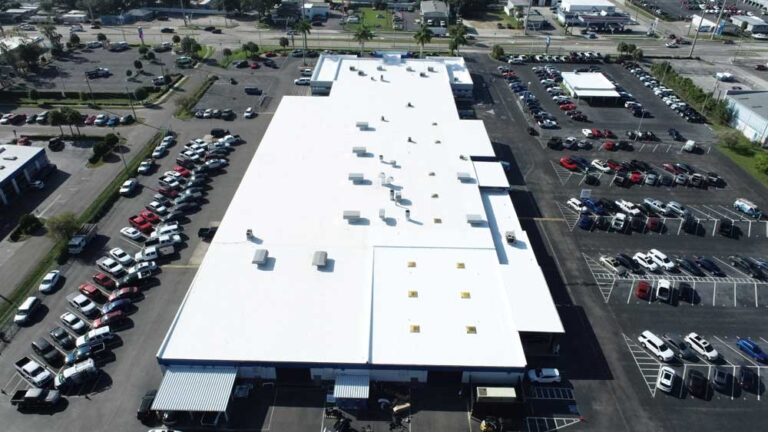
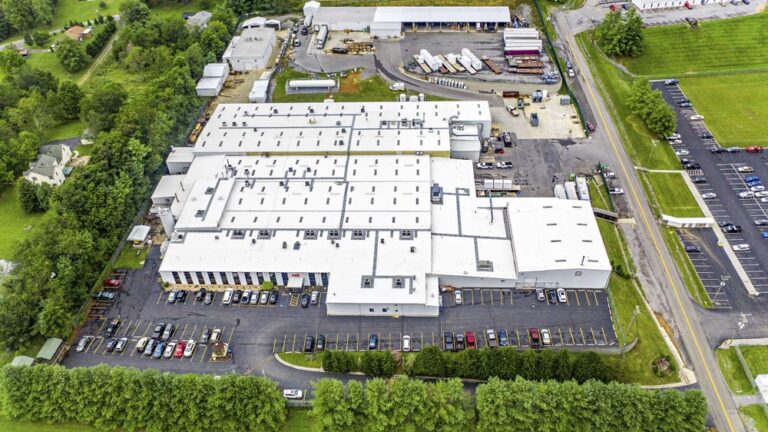
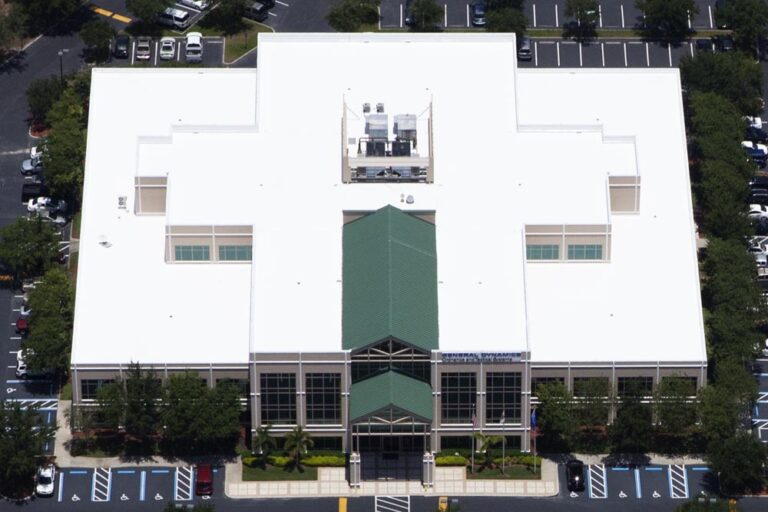
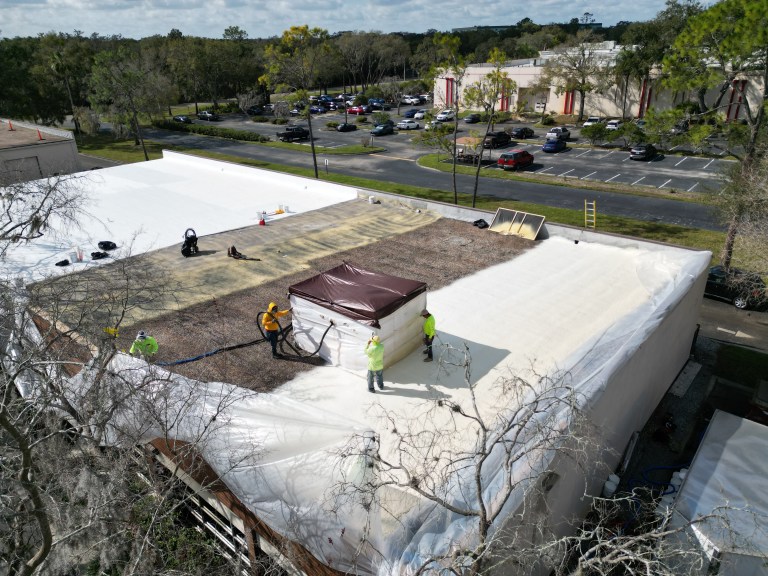
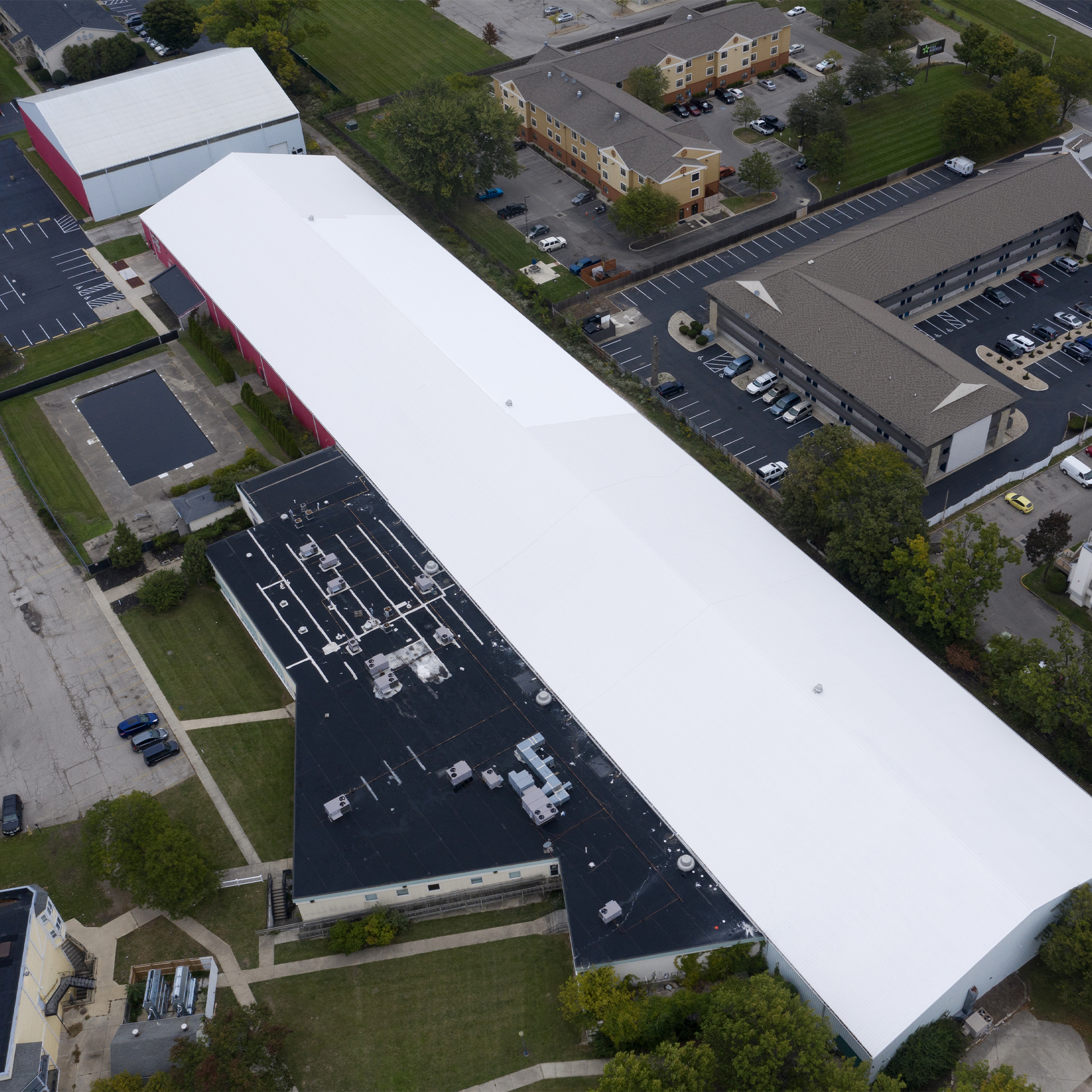
To address this issue, a cool roof coating may be applied to the surface of the roof, almost like a liquid paint. Cool roof coatings are light in color, allowing them to reflect rather than absorb the sun’s rays. Darker rooftops absorb heat into the building, causing the A/C unit to work harder to keep the building at the desired temperature. Not only will cool roof coatings make the building more comfortable and reduce energy bills, but they also provide a protective layer that can extend the lifespan of your roof.
What Types of Cool Roof Coatings Are Available?
Elastomer Coatings: Also referred to as elastic cement, elastomer coatings can be acrylic, silicone, or urethane. Polymers are added to keep the coatings less brittle and more resistant to water and moisture.
Cementitious Coatings: These coatings consist of concrete and ceramic particles dissolved in white acrylic paint. They are not waterproof, so they will need to be reinforced with a waterproofing solution.
Modified Bitumen: Layers of rubber or plastic are reinforced with fabric to create a smooth veneer for the roof.
Spray Polyurethane: Two liquids are blended to create a solid coating that is applied to the roof. The coating is adhered to the roof along with a protective coating to ward off UV damage and moisture.
Polymer: Polymer coatings are water-based and use non-conductive properties to reflect solar radiation up and away from the roof.
Single-ply Cool Roof Coating: Rather than a liquid that is sprayed onto the roof, this coating is a prefabricated sheet that is rolled onto and adhered to the roof.
All cool roof coatings increase the solar reflectance of the surface of the roof, often allowing for significantly lower electric bills. Many coating options also contain UV-resistant materials helpful for increasing roof longevity.
Not Every Roof Needs Cool Roofing
- Buildings located in areas that have shorter summers and longer winters are typically not good candidates for cool roof coatings. The reflective quality of the roof still repels heat from the sun when it is cooler outside, making it harder (and more expensive) to heat the property.
- Metal roofing is often already coated with a heat-reflective property, making a cool roof system redundant.
- Humidity also factors into the decision to apply a cool roof. If heat is reflected, it cannot effectively evaporate water, thus making the roof more prone to moisture. Regions with high humidity may also experience issues with algae and mold, which can deteriorate roofing materials over time and reduce their lifespan.
- Roofs with a steep pitch don’t absorb solar radiation and heat like flat roofs, meaning they don’t gain the same benefits as flat or low-sloped roofs.
The best way to understand if your roof is a good candidate for a cool roof solution is to speak with a commercial roofing expert. The team at Unicoat Industrial Roofing is here to assess and evaluate your roof and make recommendations as to the best coating for your needs and environment. Call today to learn more.