Concerns About Commercial Roofs After Extensive Rain
It may seem like we are discussing protecting your roof from water a lot lately, but recent storms have dropped unprecedented amounts of rain in some regions. This makes it essential for businesses to be aware of the potential for damage or loss.
Extensive rain can have significant implications for commercial roofs, potentially leading to various issues impacting the building’s integrity and operational efficiency. Addressing these concerns promptly is crucial to maintaining the roof’s health and preventing costly repairs.

1. Leaks
One of the most immediate and concerning issues after heavy rainfall is the possibility of leaks. Water intrusion can cause damage to the interior of the building, manifesting as stains on ceilings or walls, peeling paint, or even mold growth. Leaks can compromise not only the structural integrity of the building but also the safety and health of its occupants. It is essential to inspect the interior for signs of leaks and determine the source of the water entry. Early detection and repair are crucial to avoid further damage.
2. Pooling Water
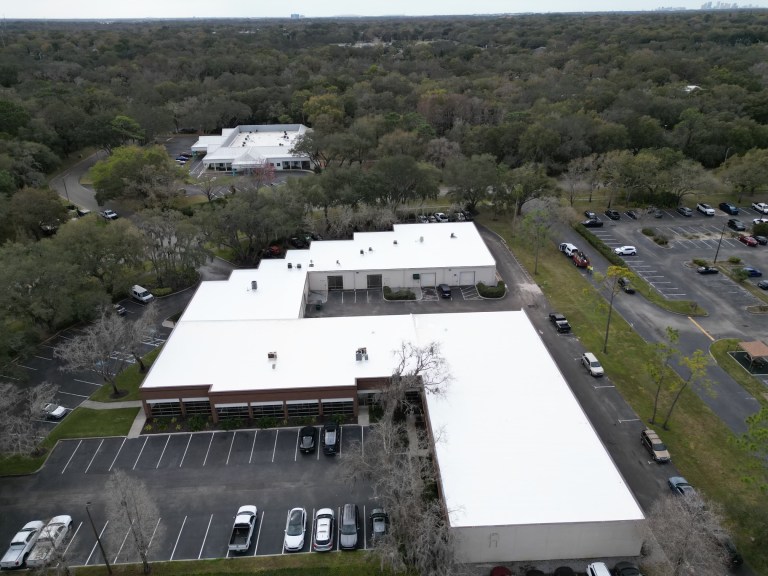
Commercial roofs, especially flat or low-slope roofs, are prone to water pooling or ponding. This stagnant water can exert additional weight on the roof structure, potentially leading to structural damage and accelerating the deterioration of roofing materials. Standing water can also lead to more severe issues, such as roof membrane damage or even collapse in extreme cases. Regular inspections are necessary to identify and address areas where water pools, ensuring drainage systems effectively direct water away from these vulnerable spots.
3. Roof Membrane Damage
The roof membrane serves as a primary line of defense against water intrusion. After extensive rain, inspecting the membrane for any signs of damage, such as tears, blisters, or punctures, is important. These defects can compromise the roof’s ability to shed water effectively, leading to potential leaks and further damage. Repairing or replacing damaged membrane sections promptly can help prevent more severe issues and extend the roof’s life.
4. Gutter and Drainage System
The gutter and drainage system is critical in managing rainwater and directing it away from the roof and building. Blocked or damaged gutters can lead to water backup, which can overflow onto the roof or cause damage to the building’s exterior. Regular maintenance to clear debris and ensure proper functioning is essential. Checking downspouts and drainpipes for blockages and ensuring they are securely attached can help prevent water damage and protect the building’s foundation.
5. Roof Penetrations
Roof penetrations, such as vents, skylights, and HVAC units, are common areas where water intrusion can occur. These components can create weak points in the roof’s integrity if improperly sealed or maintained. After heavy rain, scrutinize these areas for any signs of leaks or damage around the penetrations. Ensuring that seals and flashings are intact and functioning correctly can help mitigate the risk of water entry and associated damage.
6. Structural Integrity
Extended exposure to moisture can weaken the structural components of a commercial roof. Inspect the roof for any signs of sagging, warping, or uneven surfaces, which could indicate underlying structural issues. Such problems may result from prolonged water damage or inadequate roof support. Addressing structural concerns promptly is essential to maintain the roof’s safety and prevent further complications.
7. Moss and Algae Growth
Moist environments are conducive to the growth of moss and algae, which can thrive on roofing materials. Over time, this growth can lead to deterioration of the roof surface, particularly if it is not addressed. Regular cleaning and maintenance can help prevent moss and algae development and ensure the roof remains in good condition.
8. Insulation Issues
Water damage can affect the insulation beneath the roof, reducing its effectiveness and potentially leading to increased energy costs. Insulation that becomes damp or saturated can lose its insulating properties, leading to temperature fluctuations inside the building. Checking the insulation’s condition and replacing damaged sections is essential for maintaining energy efficiency and indoor comfort.
9. Roof Coating
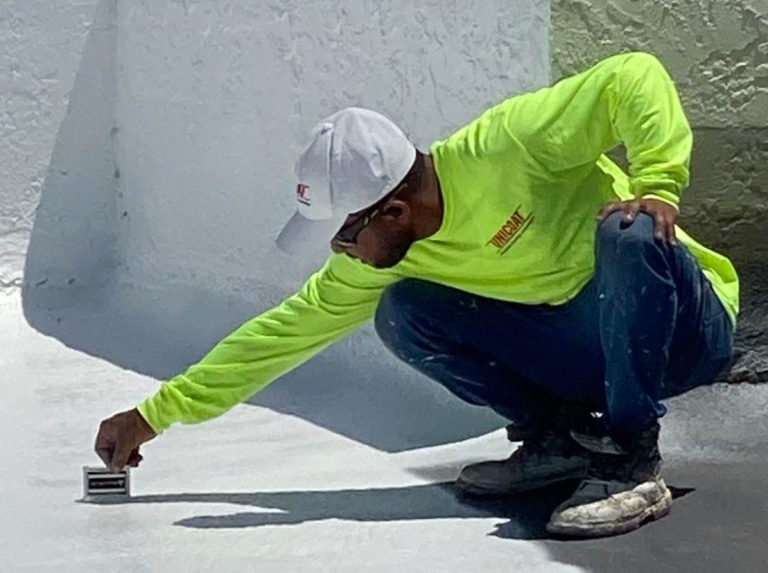
Many commercial roofs have a protective coating that helps shield the roof from environmental factors. After heavy rain, inspect the coating for signs of wear, such as peeling, bubbling, or deterioration. The coating protects the roof surface and prevents water damage. Learn more about protective roof coatings.
10. Professional Inspection
Given the potential complexity of roofing issues, seeking a professional inspection after extensive rain is advisable. A roofing professional can thoroughly assess, identify hidden problems, and recommend appropriate repairs or maintenance. Regular professional inspections can help ensure the roof remains in optimal condition and address issues before they escalate.
Call Unicoat Roofing today to ensure that your roof withstands and endures the extensive rain that can occur during summer. Taking proactive steps can help mitigate potential problems and extend the lifespan of the commercial roof, safeguarding the building and its occupants.