Flat Slope Roofing and Drainage
Your low-slope commercial roofing system has a big job, making sure that everyone and everything inside is protected from the elements. During rainy storm seasons, water on the roof with nowhere else to go may begin to form a pond or pool. An adequate roof drainage system is key to avoiding ponding water by providing an egress for all the rain and moisture.
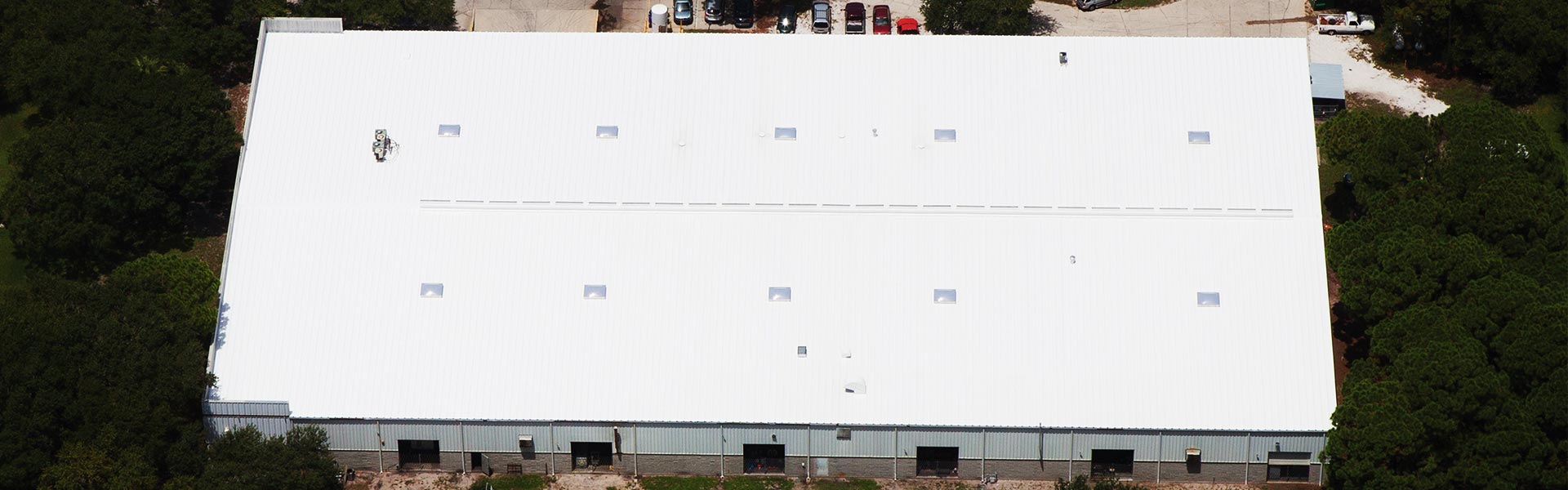
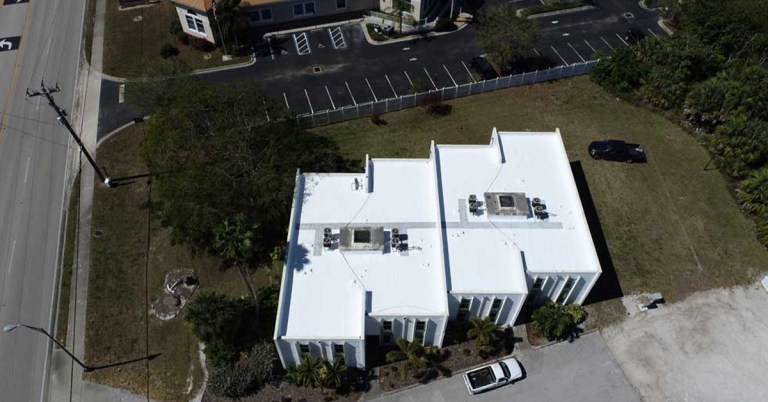
Although commercial buildings may appear to have flat roofs at first glance, most of these roofs have inherent slopes built into the design. The roofs that are actually flat typically utilize tapered insulation to add slope and allow for drainage. Some slope is needed so that the water can find its way to a drain. Water that is not given a way to drain will eventually:
- cause damage to the structure and roofing system
- deteriorate roofing materials and result in premature degradation or failure
- encourage the growth of algae and plants
- attract unwanted birds and insects
Providing Water a Way off the Roof
Commercial buildings with low-slope roofs are challenged when it comes to ridding themselves of water; therefore, roof drains are key.
How the water flows away from the roof and towards the drain is an integral part of the system design. One solution is tapered insulation, which provides a slight slope that prevents water from ponding on the roof and pushes it toward a roof drain. The drain should be situated strategically at several low points on the roof.
3 Common Kinds of Roof Drains
When you hire a commercial roofing company to solve your roof ponding problem, they may recommend one of three common roof drain options.
Inner drains: Inner drains are connected under the roof to sloped pipes that transport the water away from the surface of the roof, counting on gravity and the slope of the roof to facilitate getting the water to the drain.
Scuppers: This drainage point is located at the roof’s edge, typically installed via an opening in the parapet wall. The scupper is designed to direct water into a downspout, or it may extend out from the building to drain the water.
Siphonic drains: These drains are characterized by a baffle that prevents the intrusion of air, allowing only water to utilize the pipes. Once the pipes are full, a vacuum is created that siphons water from the roof at high speed. The baffle is also able to prevent leaves and debris from gathering in the drain, resulting in clogs and blockages.
Roof Drainage Maintenance
Routinely inspecting, assessing and maintaining roof drains should be a part of the overall building maintenance plan. As roof drains are installed at low points on the roof, debris or leaves are likely to build up. These piles of debris must be cleared in order for the drains to function adequately. These clogs can cause water to pool on the rooftop, resulting in structural problems for the building. Even a small amount of standing water can result in thousands of pounds of additional weight on the roof.
Unicoat Roofing Provides Professional Installation
When correctly installed, roof drains can prevent the occurrence of standing water for many years. Roof coatings and proper maintenance also go a long way to ensuring the longevity of your roof.
That is why property managers across the region choose Unicoat Roofing again and again – our decades of expertise and reputation in the industry make us an excellent choice for your roof maintenance and repair. To learn more, call our expert team today.