

Lower Your Risk of Rooftop Damage
Hurricane season started early this year, with Hurricane Beryl making landfall along the Texas Gulf Coast. Although the storm had slowed to a Category 1 before it reached homes and businesses, it delivered sustained winds and drenching rain that caused significant power outages (still not resolved as of this writing) and severe flooding. Experts claim that this storm season may be active and destructive – and Beryl is just the beginning. It is important to take note if you are responsible for the integrity, care, and maintenance of a commercial property. Commercial roofs can sustain various types of rooftop damage depending on the intensity of a hurricane or serious storm, including the following.

Wind Damage: Hurricanes bring strong, sustained winds that can lift and peel back roofing materials and elements such as shingles, tiles, or metal panels. When these items are damaged or torn off, they expose the underlying structure to further damage from rain and debris. Given the power of the wind and rain, even a small breach can have devastating results.
Water Leakage: Heavy rainfall during a hurricane can overwhelm drainage systems or exploit existing vulnerabilities in the roof, leading to water leaks. This can damage the interior of the building and compromise its structural integrity. When water cannot drain fast enough or has nowhere to go, it can pond and become quite heavy on the roofing structure. This can also damage insulation.
Flying Debris Impact: Hurricanes often cause flying debris (such as tree branches, signs, and other objects) that become airborne and cause roof damage, including punctures, tears, or dents. Not removing this debris promptly after a storm can also lead to further damage. Debris accumulation on the roof can block drains and cause water to pond, exerting additional stress on the roof structure and potentially leading to leaks.
Structural Damage: In severe cases or more powerful hurricanes, the structural integrity of the roof itself may be compromised by the force of the winds or impacts from debris, leading to partial or complete collapse. When hurricane-force winds get up and under a portion of the roof, it can cause the entire structure to lift or shift. The roof may also be damaged when windows break, and the interior wind pressure lifts up the roof.
HVAC Damage: Rooftop HVAC units are particularly vulnerable during hurricanes, where they are open to dangerous wind speeds with little to block the force. These units can be displaced, damaged by wind-borne debris, or even detached from their mounts. Property managers in hurricane-prone areas may wish to add additional fortification around HVAC units or any other rooftop equipment, such as rooftop lighting or solar panels.
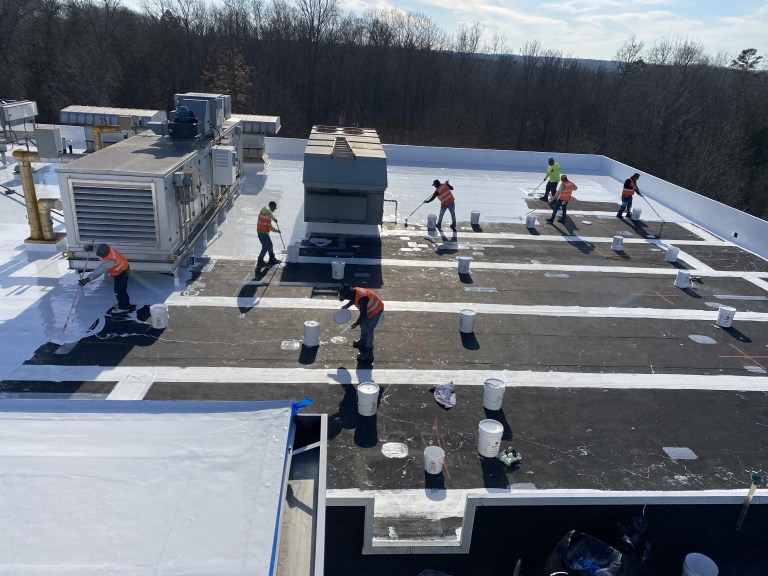
Membrane Damage: Flat or low-slope roofs with membrane coverings (such as EPDM, TPO, or PVC) can experience tears, punctures, or detachment of the membrane layers due to wind uplift or impacts. Routine maintenance to ensure the integrity of the roof coatings and coverings should be a part of all property management plans.
Gutter and Flashing Damage: Gutters, downspouts, and flashing are critical for diverting water away from the roof and building. Damage to these components can lead to water infiltration and further structural damage. It is important to check the condition of these elements both before and after a major storm.
Saturated Insulation: Water intrusion can saturate insulation materials, reducing their effectiveness and potentially leading to mold growth and further structural deterioration.
Minimize Your Risk for Rooftop Damage
After a hurricane, it’s crucial for commercial building owners and managers to conduct thorough inspections to assess any damage and promptly initiate repairs to prevent further deterioration and minimize potential business disruptions.
However, it is also vital for property owners to hold to a stringent maintenance and inspection schedule before a storm even arrives. Ensuring the integrity of your roofing systems before a storm can minimize the risk of rooftop damage.
Unicoat Industrial Roofing is the region’s leading provider of robust roof coating solutions.



One Comment
Comments are closed.