Adding Lightning Protection to Your Roof
According to a recent report from Earth Networks, there are over 441 million annual lightning pulses in the United States. A lightning pulse is a surge of electric current, typically occurring in tandem with a burst of light. There are two classifications of pulses – In-cloud (between opposite charges within the cloud) or Cloud-to-Ground (between opposite charges in a lightning cloud and a ground receptor). Of these annual strikes, approximately 31 million pulses hit the ground – or something close to the ground – such as a tree, pole, or building. In response to potential disasters, lightning protection systems (LPS) are often utilized to optimize building resilience, especially as the increased use of electronic devices in commercial buildings makes them more vulnerable.
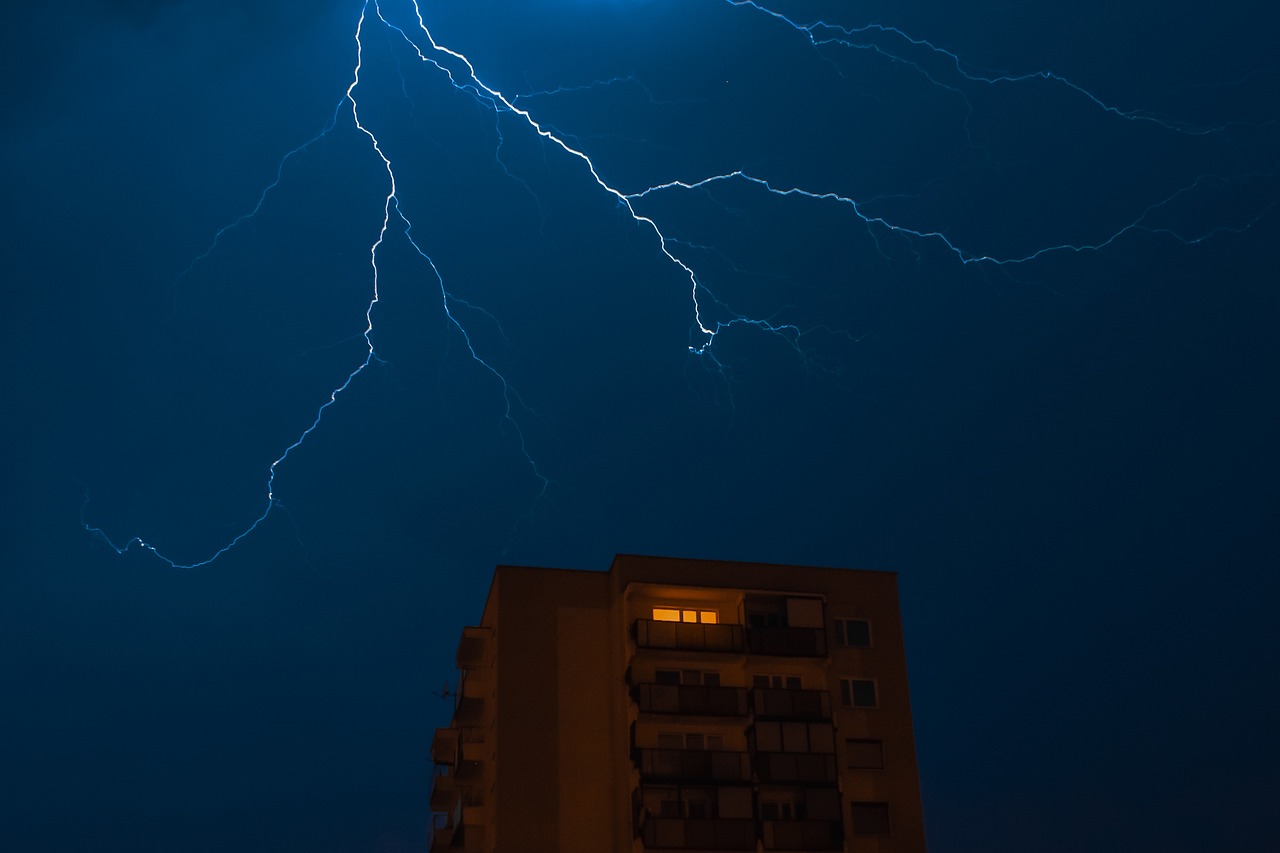
Did You Know? Texas reports the most significant number of lightning pulses annually, followed by Florida, Oklahoma, Kansas, and Illinois.
How a Lightning Protection System Works
Most of the LPS is located below the level of the roof.
Above-roof components may include air terminals or lightning rods. These terminals should be situated at the highest points on the roof. Terminals can be very thin and shorter than a foot tall. They should be spaced around the perimeter within the field of the roof and on rooftop equipment at intervals no greater than 20 feet. Air terminals are connected by multi-strand cables that safely conduct up to 3 million volts of lightning to the ground. Most buildings require through-roof penetrations, with the down conductors running along pathways inside the structure’s walls. The roof penetrations are generally sealed with typical flashing details.
Any wire entering the structure must be equipped with a surge-protective device, sometimes mounted on the roof. A lightning protection system also includes a network of mounting devices, connectors, fasteners, and adhesives, which should all be classified by UL specifically for lightning protection.
Expert Tip: If conductors are visible, they should be placed in inconspicuous locations and follow the building’s natural architectural lines.
Roof Construction
Before a roof is installed in a region that requires LP systems, the roofer, LPS installer, and general contractor should discuss project scope, schedule and roof access. There will need to be agreement on the location of lightning protection components, specifically focusing on penetrations. The roofing contractor and materials manufacturer should also be consulted for any necessary recommendations – so adhesives and components are compatible with the roofing system. In some cases, manufacturers require an additional membrane layer under LPS attachment points.
Inspections are Essential: Once the LPS is installed, the property owner should have UL or LPI Inspection Service inspect and certify the job.
Additional Considerations
LPS equipment is designed to be durable and can outlast the structure’s lifespan. However, the continuity from roof to ground can be broken if there is any disconnection or damage along the route, often during roof maintenance, repair or replacement. While a roofing contractor should be knowledgeable enough to recognize and protect the LPS components while they complete their job, the building owner should always inform any contractor about the presence of the LPS.If you are planning a reroof or a major roof repair, be sure to involve a lightning protection professional. They can oversee the removal, relocation, or reinstallation of components and ensure they meet all UL requirements post-project. The property owner should be notified before the lightning protection system is deactivated so he or she can take other safety precautions, especially at facilities such as hospitals, data processing centers, communication hubs, and residential properties.
Only Trust a Reputable Roofing Contractor
While you may think of your roof as no more than a slab of concrete above your head, the systems and networks that are located on the roof are helping to keep your building safe, energy-efficient and protected. If you are in need of a roof repair or replacement, be sure to call in a professional who understands how to work around all the components and has the skills to manage the comprehensive project.
Unicoat Industrial Roofing is a trusted and experienced contractor. We specialize in roof coatings and maintenance programs designed to extend the life of your commercial roof.