Weatherproofing Your Commercial Roof for Harsh Winter Conditions
Winter can be one of the toughest tests for a commercial roof. For business owners and commercial facility managers, weatherproofing the roof before winter is essential to protecting your investment and preventing downtime. From professional inspections and drainage improvements to insulation upgrades and advanced roof coatings, there are several ways to fortify your roof against the season’s harshest conditions.
Understanding the Impact of Winter Weather on Commercial Roofs
Commercial roofs—especially flat or low-slope systems—face unique challenges during the winter months. Because snow and ice don’t easily slide off, they can accumulate and cause stress on the structure. When temperatures fluctuate, melting and refreezing cycles create even more problems.
Common winter-related roofing issues include:
- Freeze-thaw damage: Water seeps into small cracks, expands as it freezes, and worsens existing damage.
- Ice dams: When snow melts unevenly, it can refreeze near roof drains or edges – blocking proper drainage.
- Ponding water: Poor drainage can lead to standing water that freezes, weakening roofing membranes.
- Thermal shock: Rapid temperature changes cause materials to expand and contract, resulting in cracking or seam failure.
Without proactive maintenance or weatherproofing, these issues can shorten a roof’s lifespan or necessitate expensive structural repairs.
Weatherproofing and Beyond: Strategies to Protect Your Roof
Schedule a Professional Roof Inspection: The first step in winter preparation is a comprehensive roof inspection. A commercial roofing contractor can identify vulnerabilities such as cracks, seam separations, damaged flashing, or clogged drains that could worsen under snow and ice. Addressing these minor issues before freezing weather arrives can prevent major leaks and emergency repairs later in the season.
Improve Drainage and Insulation: Proper drainage is critical for preventing snow and ice buildup. Roof drains, scuppers, and gutters should be cleared of debris to allow melted snow to flow freely. Adding crickets or tapered insulation systems can help direct water toward drains, reducing ponding that leads to ice formation. Insulation also plays a key role in winter roof performance. A well-insulated roof maintains a consistent temperature – minimizing heat loss that causes uneven melting and ice dam formation.
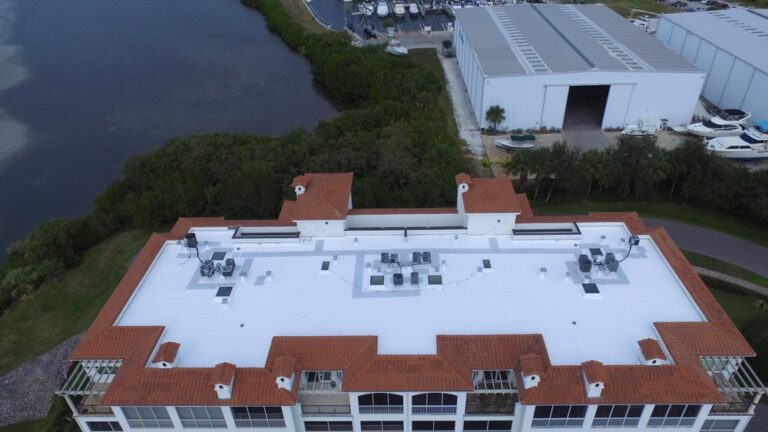
Apply a Roof Coating for Enhanced Protection: One of the most effective ways to weatherproof a commercial roof is through the application of a protective roof coating. Roof coatings act as a seamless barrier that seals the surface, preventing moisture penetration and protecting against temperature fluctuations.
Popular options include:
- Silicone coatings: Excellent for waterproofing and UV resistance, ideal for flat roofs prone to ponding water.
- Acrylic coatings: Reflective and energy-efficient, helping stabilize roof temperatures year-round.
- Polyurethane coatings: Durable and impact-resistant, great for high-traffic or industrial roofs.
Applying a roof coating can extend the life of your existing roof system, reduce maintenance costs, and improve overall weather resistance—without the disruption of a full replacement.
Implement a Snow and Ice Management Plan: Even a well-protected roof needs ongoing attention once winter weather arrives. A snow and ice management plan ensures that heavy snow and ice accumulations are removed safely and efficiently. Partner with a roofing contractor that offers professional snow removal services—using proper tools and techniques to avoid damaging the membrane. Additionally, consider installing heat trace cables around drains or roof edges to prevent ice dams and keep meltwater flowing freely.
Maintain Year-Round Preventive Care: Winter weatherproofing isn’t a one-time task—it’s part of a continuous maintenance strategy.
Routine care also helps identify when it’s time for larger upgrades, like new insulation, improved drainage, or an additional coating layer for maximum protection. Harsh winter weather doesn’t have to threaten your commercial property. By combining proactive maintenance, proper drainage, professional inspections, and the protective benefits of roof coatings, you can significantly extend your roof’s lifespan and minimize costly repairs.
Working with Unicoat Industrial Roofing ensures every aspect of your roof—structure, surface, and drainage—is ready to stand up to whatever winter brings. Call us before the harshest conditions set in.