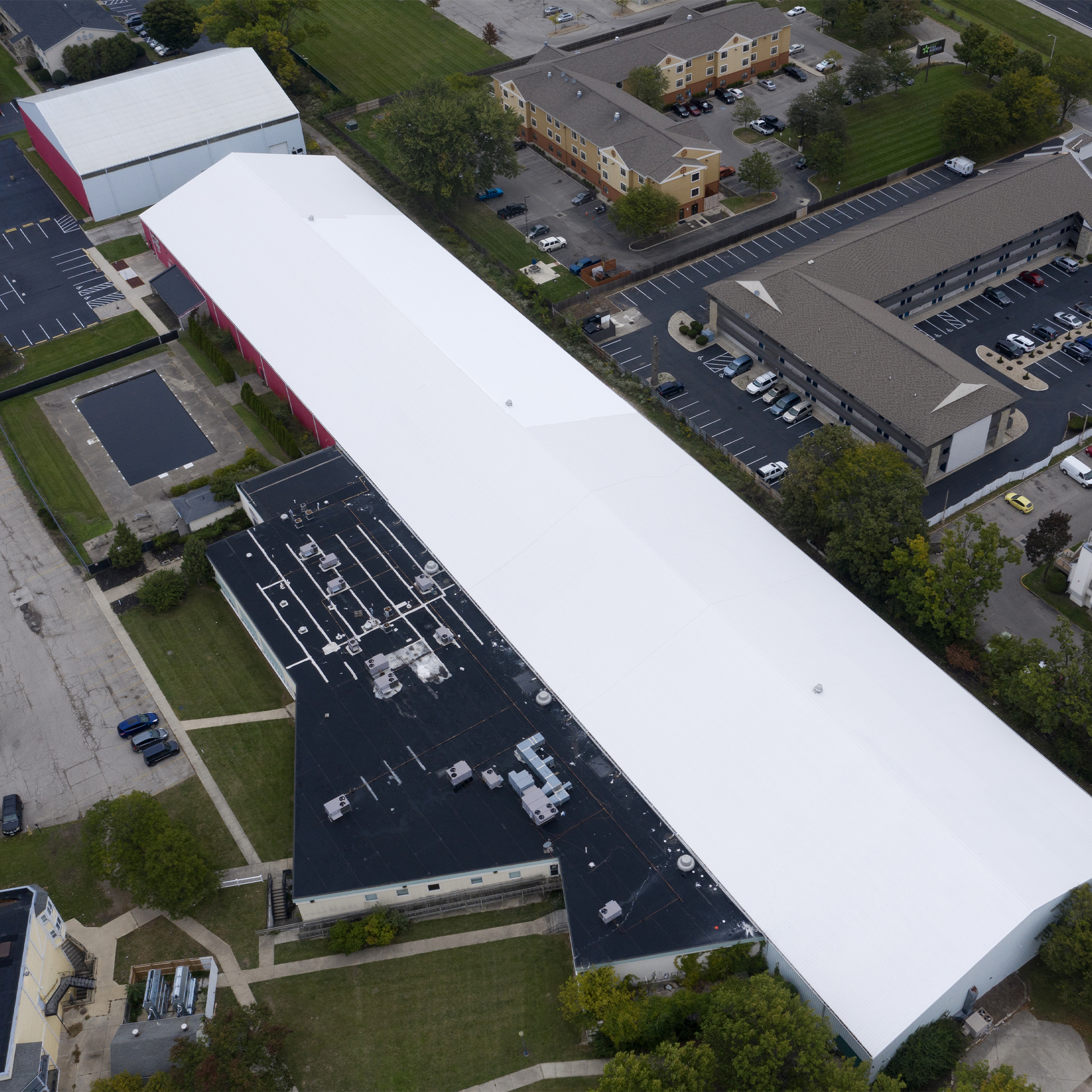
Roof Coatings: Protection During Cold Weather
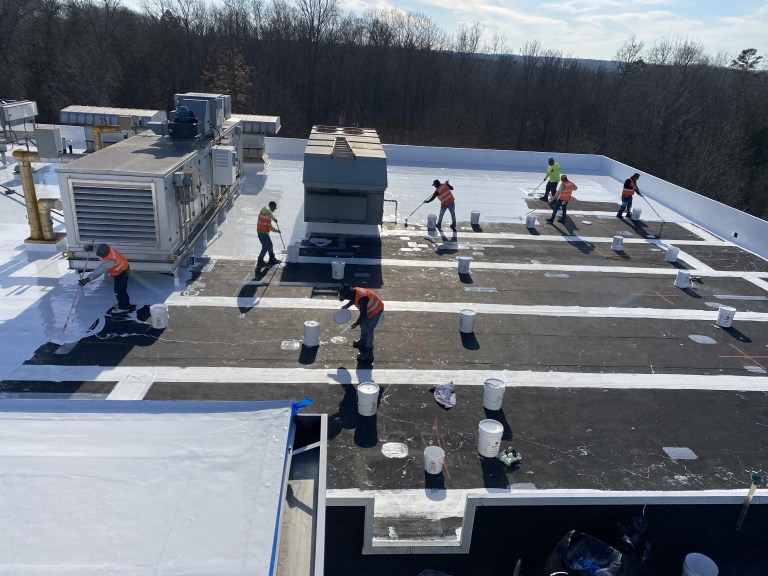
The recent “polar vortex” that descended on the country has wreaked all kinds of damage, from landscaping to buildings. One of the ways that businesses can help protect their roof systems in frigid cold weather is the application of roof coatings. Roof coatings offer a range of benefits for protecting roofing structures in cold weather, extending the lifespan of the roof, improving energy efficiency, and minimizing the risk of damage from freezing temperatures. These coatings are often an essential part of maintaining a roof in regions that experience harsh winter conditions.

Thermal Insulation and Energy Efficiency During Cold Weather
One of the primary ways roof coatings assist in cold weather is by providing an additional layer of thermal insulation. Many modern roof coatings are designed to reflect heat, preventing heat loss from the building and keeping the interior warm. This is particularly important in colder climates, where heating costs can be significant. By adding a reflective or insulating roof coating, the roof helps maintain a stable internal temperature and reduces the workload on heating systems. As a result, this reduces energy consumption and lowers heating costs during the colder months.
Thermal insulation also helps to prevent rapid fluctuations in temperature, which can lead to structural issues in the roof. Sudden temperature changes can cause materials to expand and contract, which is particularly problematic for traditional roofing materials like asphalt shingles or metal roofs. A roof coating, particularly those with insulating properties, can help minimize these fluctuations, providing a more stable environment for the roof’s structure.
Waterproofing and Protection Against Ice Dams
Roof coatings create a waterproof barrier on the surface of the roof, which is essential in protecting against water infiltration. This is particularly important in cold climates, where rain or melted snow can seep into the roofing materials and freeze overnight, causing serious damage. When water freezes, it expands, which can cause cracks in the roof material or damage to underlying structures. Over time, this can lead to leaks, mold growth, and further deterioration.
Furthermore, during winter, ice dams are a significant concern. Ice dams form when heat from inside the building causes snow on the roof to melt. The melted snow then runs down the roof and refreezes at the roof’s edge, forming a dam that prevents proper drainage. This backup can lead to water seeping under the shingles, which can cause water damage to the roof structure. Roof coatings with excellent waterproofing properties help prevent this issue by creating a smooth, watertight surface that makes it harder for ice dams to form, thus reducing the risk of water damage.
Flexibility and Crack Prevention in Cold Weather
Temperature fluctuations can cause roofing materials to contract and expand. In cold weather, materials such as metal and asphalt become brittle and more susceptible to cracking. Roof coatings designed for cold weather often include flexible polymers or elastomers that allow the coating to move with the roof as it shifts with the changing temperatures. This flexibility is essential for preventing cracks and splits that can result from the expansion and contraction of the roofing material.
For example, an elastomeric roof coating can stretch and contract without losing its adhesion, providing a seamless barrier that protects the underlying materials. The coating’s flexibility allows it to move with the roof structure, which helps maintain its integrity and prevents the formation of cracks that could allow moisture to infiltrate the roof.
Roof coatings are formulated to endure various weather conditions, including extreme cold. These coatings are designed to withstand the pressures and challenges of freezing temperatures, snow, ice, and fluctuating weather patterns. By providing an extra layer of protection, roof coatings help ensure the roof can handle winter demands without succumbing to the damage that often occurs when roofing materials are exposed to harsh conditions.
Unicoat Industrial Roofing has installed over 4 million gallons of roof coatings to commercial roofing systems nationwide. Call today to learn more about how you can protect your building for future weather events.