
R-Value, Thermal Performance and Roof Coatings
When it comes to energy efficiency in buildings, insulation often takes center stage. And at the heart of insulation is a concept called the R-value—a measurement that plays a critical role in thermal performance. But insulation isn’t the only factor in keeping buildings cool in summer and warm in winter. Commercial roof coatings are an increasingly popular solution that can significantly boost a building’s energy efficiency—often in ways that complement or enhance traditional insulation. This article will serve to break it all down.
What Is an R-Value?
The R-value is a measure of thermal resistance. In simple terms, it tells you how well a material resists heat flow. The higher the R-value, the better the insulation—meaning less heat escapes in winter and less heat enters in summer. R-values are determined by factors like material type, thickness, and density. Common insulation materials like fiberglass, foam board, and spray foam all have different R-values per inch of thickness.
But here’s the catch: R-value alone doesn’t tell the whole story—especially when it comes to the roof, where exposure to sun and weather can have a dramatic impact on thermal performance.
How Roof Coatings Improve Thermal Performance
Commercial roof coatings—typically made from silicone, acrylic, or polyurethane—are applied as a liquid and cure into a seamless, weather-resistant membrane. While roof coatings may not have a high R-value in the traditional sense, they offer other forms of thermal protection that directly contribute to a building’s energy efficiency.
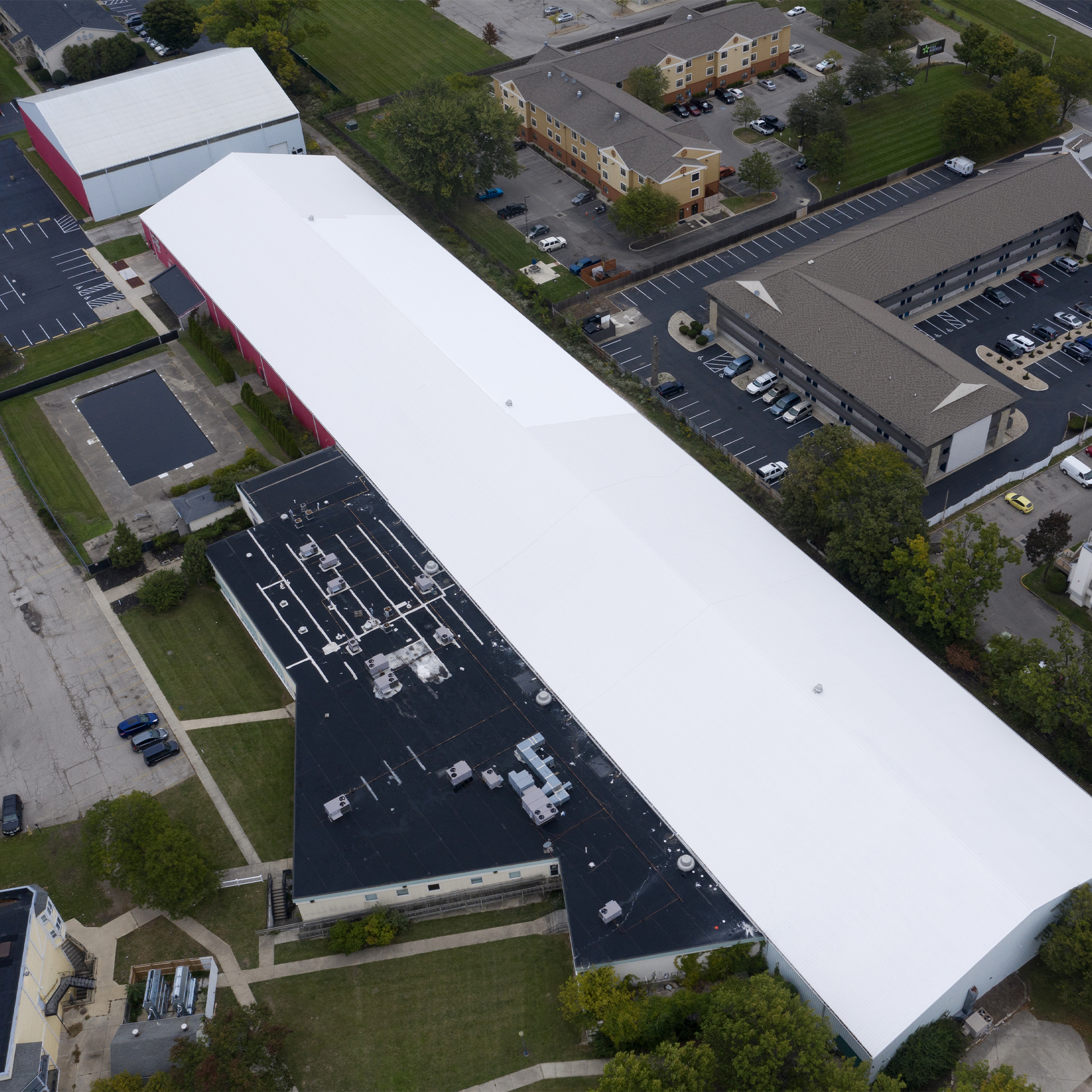
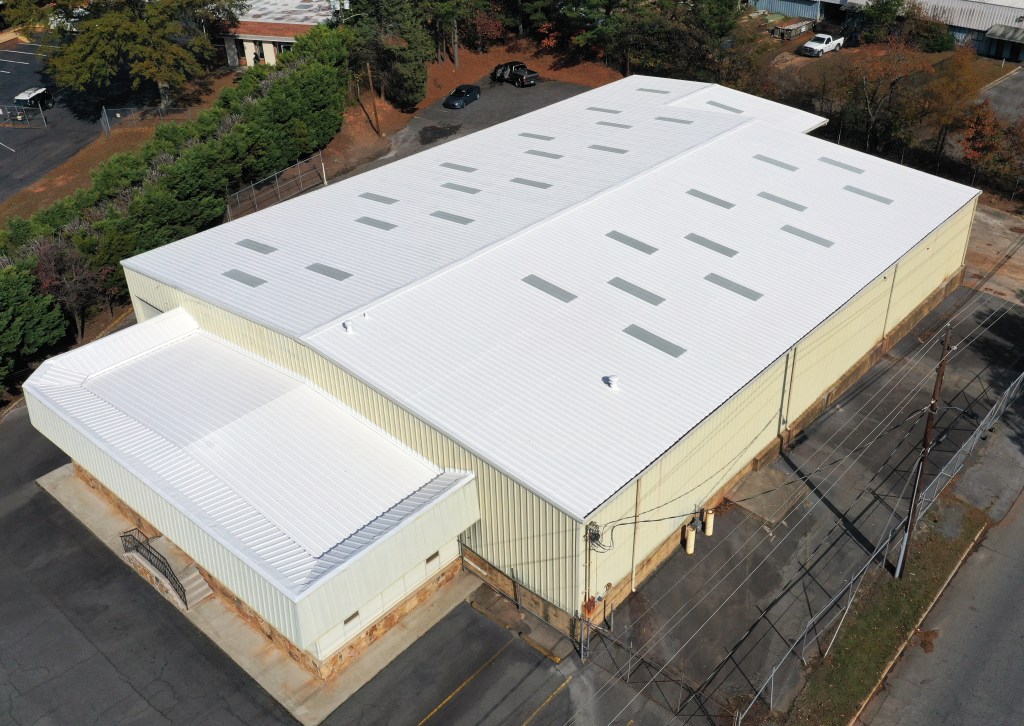
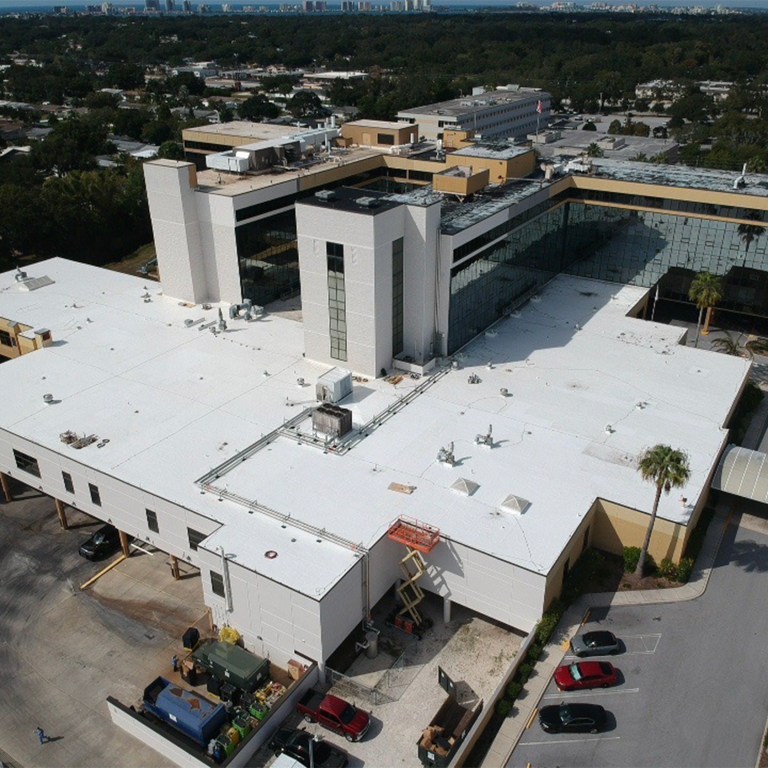
Reflectivity (Solar Reflectance): One of the biggest thermal benefits of roof coatings is their high solar reflectance—the ability to reflect sunlight (especially infrared radiation) away from the building. A white or reflective roof coating can reflect up to 80–90% of the sun’s rays. This dramatically reduces the roof surface temperature—sometimes by as much as 50–70°F compared to dark, uncoated roofs. A cooler roof surface means less heat transfer into the building, reducing the demand on HVAC systems and lowering cooling costs.
Emissivity: In addition to reflecting sunlight, many roof coatings have high emissivity, which means they release absorbed heat efficiently. After the sun sets, a high-emissivity roof cools off faster, helping the building shed heat rather than store it overnight. Combined with reflectivity, emissivity further reduces overall thermal load and enhances interior comfort—especially in hot climates or buildings with large, flat roof surfaces.
Air and Moisture Barriers: Roof coatings help seal cracks, seams, and penetrations, thus eliminating air leaks and preventing moisture intrusion. Coatings reduce thermal bridging (where heat bypasses insulation through gaps or conductive materials); avoid humidity and condensation issues that degrade insulation over time; and preserve the effectiveness of underlying insulation layers.
R-Value vs. Roof Coatings: Complementary, Not Competitive
It’s important to note that roof coatings are not a substitute for insulation. They don’t add a measurable R-value in the same way traditional insulation does. However, by keeping the roof cooler and reducing thermal transfer, roof coating optimizes the performance of the existing insulation – as well as the overall energy profile of the building.
Think of roof coatings as part of a layered approach to energy efficiency:
- Insulation provides resistance to conductive heat flow.
- Roof coatings reduce the amount of heat reaching the insulation in the first place.
Together, they create a more effective and efficient thermal barrier.
Bonus Benefit: Longevity and Sustainability
Roof coatings extend the lifespan of commercial roofing systems. They achieve this by protecting against UV damage, weathering, and thermal cycling. This reduces maintenance costs and delays expensive roof replacements—an added sustainability win.
Understanding R-values is key to evaluating insulation, but it’s only part of the equation when optimizing a commercial building’s thermal performance. The professionals at Unicoat Industrial Roofing can help you to understand how all the components of your roof work together for the best performance, optimizing your investment. Call today to learn more.



One Comment
Comments are closed.