Financial Advantages of Extending Roof Service Life
Is your roof an asset that’s helping or hurting your bottom line? For many business owners and facility managers, the roof is a crucial yet often overlooked component of a property. While its primary role is protection, a well-maintained roof can significantly influence expenditure patterns in unexpected ways. Proactively extending the service life of your roof isn’t just about preventing leaks or maintaining appearances; it’s a strategic move with compelling financial benefits.
Imagine the cost implications of frequent repairs, constant energy inefficiencies, or even unexpected roof replacements. These scenarios can lead to significant—and often avoidable—financial strain. Instead, focusing on sustained roofing health can turn potential liabilities into actual gains. Roof service life extension techniques, like advanced coating systems, offer a blend of protection and energy efficiency, potentially reducing cooling costs, lowering peak energy demands, and minimizing disruptions to operations. Moreover, a proactive roof maintenance strategy can preserve capital resources by deferring expensive replacements. The ripple effects extend even further, possibly contributing to lower insurance premiums and enhancing property value. In the following sections, we’ll explore how focusing on your roof today can lead to substantial fiscal advantages tomorrow.
Reducing Lifecycle Replacement Costs
Reducing lifecycle replacement costs is a pivotal consideration for any commercial property owner or facility manager. By extending the service life of your roof, you effectively postpone the significant expense associated with a full roof replacement. Investments in maintenance, repairs, and coating applications are generally much lower than the costs associated with replacing an entire roofing system. Utilizing advanced techniques and materials such as spray foam roofing and reflective coatings enables property managers to enhance the durability and lifespan of existing roofs.
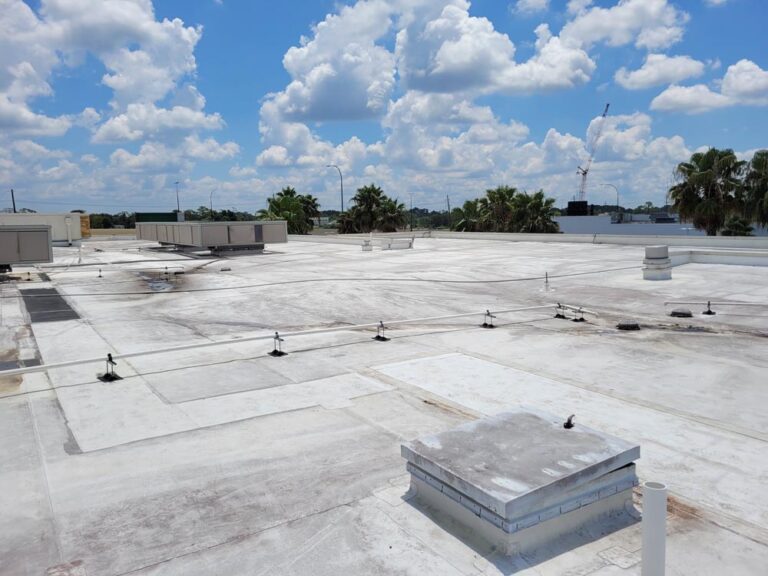
For instance, liquid-applied roof coatings offer a seamless waterproof barrier that can help to stave off leaks and greatly slow down wear and tear, preserving the roof’s structural integrity. These coatings can reflect up to 90% of solar heat, lessening thermal expansion and contraction cycles that can contribute to material fatigue. In regions like Florida, where UV exposure and heat are high, this can be a particularly effective strategy to combat weather-related degradation.
Additionally, postponing a full roof replacement not only saves immediate capital outlay but also minimizes business disruptions. Installation of roof coatings can often be completed without disrupting daily operations, thereby avoiding potential revenue loss that might accompany a more extensive replacement project. This strategic approach to roof management enhances financial stability and underscores a commitment to smart, sustainable building maintenance practices.
Stabilizing Annual Maintenance Spending
Stabilizing annual maintenance spending begins with proactive roof care. Regular inspections and maintenance help identify small issues before they become costly repairs, preventing financial surprises. By addressing minor wear and tear promptly, businesses can avoid sudden spikes in maintenance costs that disrupt cash flow.
Instead of relying on reactive solutions, a consistent maintenance schedule allows companies to plan and budget more accurately. Knowing that routine inspections will occur annually, you can anticipate expenses and allocate resources accordingly. This approach minimizes the unpredictability of emergency repairs and extends the service life of the roof, providing further savings over time.
In Florida’s demanding climate, roofs face trials from heat, heavy rainfall, and hurricanes. A well-maintained roof can better withstand these conditions, reducing the risk of severe damage that necessitates large expenditures. Insurance premiums may also benefit from a documented maintenance history, as insurers appreciate efforts to minimize risk and maintain structural integrity.
Finally, a proactive maintenance strategy enables businesses to prioritize spending. Instead of awaiting failure, you can plan gradual enhancements over time. This not only helps stabilize annual expenditures but also contributes to a property’s overall energy efficiency and sustainability, offering both financial and environmental benefits.
Improving Asset Valuation Through Longevity
Roof longevity is a critical factor in improving the asset valuation of a commercial property. By extending the service life of a roof, property owners can enhance the intrinsic value of their investment. A roof that remains in optimal condition for an extended period signifies that a property is well-maintained, which can translate into higher market valuation. Prospective buyers and investors often look favorably on properties requiring minimal immediate repairs or replacements.
Furthermore, extending a roof’s life reduces the need for frequent replacements, which can be both costly and disruptive. The savings from avoiding premature roof replacements can be substantial, freeing up capital that can be redirected towards enhancing other areas of the property, thereby boosting its overall worth. Minimizing downtime associated with roof repairs also ensures that business operations remain uninterrupted, maintaining steady revenue generation.
Additionally, a well-maintained roof can contribute to the energy efficiency of the building. Energy costs can be reduced significantly with reflective coatings that decrease heat absorption, a valuable consideration in Florida’s hot climate. This aspect not only lowers operational expenses but also adds appeal to eco-conscious investors looking for sustainable building solutions. Collectively, these financial benefits play a significant role in bolstering the asset value of a property over time.
FAQ1: Why is extending roof life more cost effective than replacement?
Extending the service life of your roof is often more cost-effective than a full replacement primarily due to reduced labor and material costs. Replacements involve tearing off the existing roof, which can be labor-intensive and disruptive. Extending roof life through coatings or repairs avoids these tear-offs, minimizes downtime, and translates into significant savings on materials. Additionally, maintenance and coating applications can be more budget-friendly and fit into routine operating expenses, as opposed to the substantial one-time investment of a new roof installation.
FAQ2: How does longevity impact operating expenses?
A longer-lasting roof can have a positive impact on operating expenses by reducing the frequency and cost of repairs and maintenance over time. A well-maintained roof minimizes the risk of leaks and damage, which can lead to expensive repairs and potential downtime for businesses. Furthermore, extending roof life through reflective coatings can enhance energy efficiency, thereby reducing utility costs. This extends beyond direct roof maintenance costs and results in overall savings in operational budgets.
FAQ3: Do longer lasting roofs improve property value?
Yes, longer-lasting roofs can improve property value. A roof that is in good condition and has a history of regular maintenance is attractive to potential buyers or tenants because it represents lower anticipated maintenance costs and fewer immediate concerns. Additionally, a roof with a longer anticipated service life is seen as an asset, as it reduces the likelihood of expensive future replacements. Energy-efficient roofs with extended longevity can also appeal to environmentally conscious buyers, contributing to a property’s market value.
Maximizing Value From Existing Assets
Considering the financial advantages tied to extending your roof’s service life, it’s evident that proactive maintenance offers more than just physical protection—it’s a prudent investment decision. By prioritizing roofing health through regular inspections and advanced coating systems, businesses in Florida can navigate significant cost avoidance related to premature replacements, fluctuating maintenance expenses, and potential energy inefficiencies. A robust maintenance strategy not only preserves capital and minimizes operational disruptions but also enhances asset valuation through improved energy efficiency and sustainability. This approach solidifies your property as a reliable, valuable asset in your financial portfolio, presenting benefits that resonate well into the future.