Comprehensive Roofing Systems Guide
Commercial roofing systems are constructed from a wide range of materials. The appropriate choice for any given building depends on factors such as the structure of the building, regional climate, and the amount of foot traffic on the surface. Commercial roofing contractors are leveraging advances in commercial roofing technology and applying their knowledge to help you determine the best solution based on the project requirements. In recent years, new commercial roofing systems and products have delivered improved resistance to extreme temperatures while maximizing environmental efficiency. Here is a quick guide to the most common roofing systems.

Deciding Between Commercial Roofing Systems
When choosing the type of commercial roofing system you’ll need for your business, it is necessary to consider the type of facility you are working in and what the building’s purpose is.
Roofs are classified as Low Slope/Flat Roofs or Steep Slope Roofs.
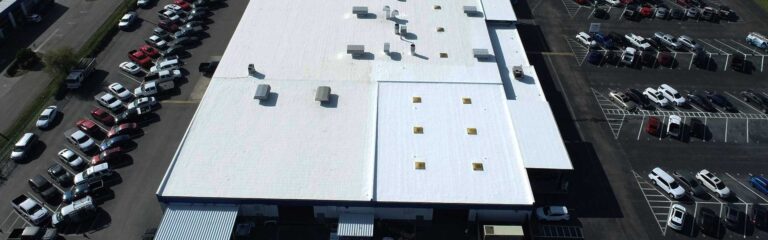
- Low slope roofing systems are typical of big box retailers, warehouses and shopping centers. Appropriate roofing systems for low slope roofs include EPDM, PVC, and TPO.
- Steep slope roofing systems are more commonly seen on residential homes than commercial properties. They are usually comprised of metal, shingles, slate or tile.
Commercial Roof Types and Systems Guide
Single Ply Roofing: Whether TPO, PVC, or EPDM, these roofing systems are exceptionally strong and flexible. These materials are the first choice of many building owners because they resist weathering, peeling, and cracking. There are two categories of single ply roofing – thermoplastic membranes and thermoset membranes. Their distinctive characteristic is they are installed in a single layer. TPO (Thermoplastic Polyolefin) is highly reflective and features heat-welded seams. It is most often installed on low-slope roofs. TPO is available in a variety of colors, although the most popular are white and grey. The membrane can be mechanically attached, adhered, or ballasted. PVC (Polyvinyl Chloride) is comprised of two layers of PVC with a polyester reinforcement in between. The membrane is UV-resistant, long-lasting, durable, watertight, and fire-resistant.
EPDM Roofing (Ethylene Propylene Diene Monomer): Ethylene propylene diene monomer (EPDM) is known for its durability and elasticity as it is made of synthetic rubber. This type of roofing is remarkably resistant to UV rays and all other types of sun damage. EPDM rubber roofing is one of the most utilized roofing solutions because it combines affordability with strength.
Modified Bitumen Roofing Systems: A modified bitumen roof uses a mixture of asphalt and a unique chemical polymer for exceptional temperature resistance and flexibility. The roofing system can be applied in multiple layers, utilizing a combination of self-adhesive sheets, hot-mopped asphalt, and adhesives. The seams are melted together to create a strong, secure bond. Modified Bitumen roofing systems are rated against extreme weather and climate conditions, including wind, fire, and hail.
Built-Up Roofing Systems: Built-up roofing consists of 3-5 layers designed for enhanced protection, especially in extreme climatic conditions with wide temperature swings. These roofs have been around for over a century.
Metal Roofs: Metal roofing is known for longevity and durability, as well as attractive aesthetic design. Utilized on both low-slope and steep roofs, many property owners prefer the overall look and longevity these roofs provide.
Liquid Applied Roofing: A liquid-applied roofing membrane is built in place with resin and reinforcing polyester. It offers excellent waterproofing ability as it can be sprayed on – or roller applied – into even hard-to-reach areas. Due to the nature of liquid roof installation, the application doesn’t disturb building occupants or emit strong odors, making it a viable choice for busy operations that cannot close.
Roof Coating Systems: This fully adhered coating is made of a fluid-applied membrane that can be stretched and still return to its original form. The most common types of roof coating are acrylic and silicone, which both work to lower energy consumption, protect against leaks, maintain interior temperatures, and extend the life of the roof.
Unicoat Industrial Roofing is an expert roofing contractor specializing in roof coating solutions. If you are looking for an affordable and versatile solution that will significantly extend the life of your commercial roof, call us today to learn more. We can guide you through the process and help you choose the best roof for your building and budget.